Jump to content
View in the app

A better way to browse. Learn more.

300ZX Owners Club

A full-screen app on your home screen with push notifications, badges and more.

To install this app on iOS and iPadOS
  1. Tap the Share icon in Safari
  2. Scroll the menu and tap Add to Home Screen.
  3. Tap Add in the top-right corner.
To install this app on Android
  1. Tap the 3-dot menu (⋮) in the top-right corner of the browser.
  2. Tap Add to Home screen or Install app.
  3. Confirm by tapping Install.

Just to start with can we stick to combined pressure or it just gets confusing.


So is 20-22psi ok on stock setup?


Because in a few weeks that's what I'll have. I've done my research and most say that after 28psi you need to seriously start thinking about internals.


So I thought a 3-4 psi increase each turbo wasn't over the top. But should give me that little extra kick. And I was just wondering what other people where running.


Before anyone asks one of my turbos is shot and while I was changing them I thought I might as well do a few mods and get a little more power.


I should be getting 400bhp @ flywheel at this pressure . . . if my maths is right :tongue_smilie:

  • Replies 162
  • Views 32k
  • Created
  • Last Reply

Top Posters In This Topic

Most Popular Posts

  • Dude stock tubs dont run 21psi,i dont care what your claiming in aint happening,heat soak and impeller size permits this,its not possible.Im running gt525 turbos which run the largest impeller you can

Posted Images

Featured Replies

im actually loving this tread, having had many a conversation with my American z owning friends. ive always had an open mind as to the actual potential of our engines.


I think the biggest issue with UK cars is they are cheap to buy, usually have minimal mods to increase the power, but people skimp on the maintenance as they do not realise the running costs involved, they then drive them into ground and sell them either smoking, rusted to hell or have major work that needs doing to them, decent zeds are actually hard to come by in the UK. they then get a bad reputation of being unreliable and not very strong engines when its actually down to how they have been treated.


As i said, ive seen Noz's car at pod, ive had a good nose about, it is indeed stock.


But boy is it quick, ive seen his engine map, not that i understood it, but he was mapping on the stand and taking it down the strip at pod, i have to say im following this with interest and its nice to know what and how or even when noz will actually (if) blow his engine.


I also asked my my GT525 turbos, as it would be handy to know if i can indeed give them more boost. though at the moment i need to change the clutch as its started to slip when boost hits - oops.


It is a good thread, isn't it?!


I am honestly not pushing the engine side of things, 131bhp per litre is nothing. A stock MR2 Rev 3 turbo leaves the factory at 120bhp per litre. Look at all the Evos and the bhp/litre they extract from their engines. You have to remember that the 3L VG was bound by the 280ps Gentleman's Agreement. People need to take a step back and look at some other comparable engines from the same era, notably the RB26DETT, the 2JZGTE and the Mitsubishi GTO/3000GT 6G72.


Typical question asked of how much power on stock internals of the 6G72: http://www.3si.org/forum/f35/how-much-horsepower-stock-internals-196284/


Typical answers (highlighted in bold are the points relevant to us):


I would say close to 800 flywheel HP.


It's all about the tuning.


We do have forged rods so that helps, but we have cast pistons which do not disipate heat as fast or evenly like forged which cuases hot spots and makes them prone to cracking when pushed to the limit, this makes any tuning issues that cross that fine line go Boom.


Stock bottom end with low miles taken care of and tuned perfectly I would say at least 700 crank, and maybe higher but not as reliably.


It has already been engine dynoed to 809 @25psi. I'm personally hoping 900 or so before it has had enough


the rods may be forged, but they have been proven to bend like spaghetti with poor tuning. also, teh pistons may be strong, but they have been proven to blow apart with poor tuning. all you need to know is that you own a vr-4, and it is a good car. as long as you don't f*&K up or something, you won't find the true limit of the car without sponsorship................noone else has.


Say huh? How many Twisted like spaghetti rods have occured? Not too many. The pistons are cast so no, they are not all that great. But tune the motor well and all will be fine.


Of course it has to do with tuning. You can easily make the motor handle 700hp tuned and blow up with 400 untuned.


Do you see the difference between the answers on there and the answers you would get on here? It is simply all about the tuning, and a bit of luck with regards to individual components not randomly breaking down (dropping an injector at 21psi will not be good).


My engine is showing 112k miles/kms on the clock. Compression is OK, but it is just a typical 300ZX that can be bought by anyone. It isn't immaculate, it was running without a thermostat with a load of K-Seal in the coolant, but it was just a pin-holed rad thankfully. So it is by no means some mythical 300ZX. It's led a hard life like a lot of Zeds out there.


Again, the 3000GT requires an aftermarket EMS like the Supra, so tuning has not been dictated by generic chip tunes, so like the 2JZ community, they have a better idea of what their engines are actually capable of. Even the R32 RB26DETT can be chipped just like the Z, yet people simply fit a PowerFC at the very least. It is the UK Zed tuning community that is different to everywhere else. What I am showing/suggesting is nothing new, so I don't mind taking the flak as it will be for the greater good. I want to see the Z32 respected again, fighting with the Supra on the drag strip and the dyno. The only real bugbear in my eyes is having to pull the engine to fit decent turbos.


3L turbocharged engines are not troubled by anything below 500bhp. The only design flaw I'm aware of with the VG is the casting in the coolant channels at the rear, hence cylinders 5 & 6 are the first to go. RB26DETT, it's the ringlands on cylinder 6. It is at this point it would be nice to have a VG engine expert on here helping out with whatever shortcomings there may be. I'm guessing it's going to take some time before that is likely to happen...


Someone needs to prove to me why we can't run 700+bhp on a stock bottom end, when similar engines do. I have an open mind, I'm open to the possibility that their may be something inherently wrong with Nissan's engineering masterpiece :laugh:

This is possibly the most interesting and informative thread I've read since my days on lancer register reading about Evo tuning posted by the dude who started geekmapped dot com......... Exact Same scenario.

It would be nice for a VG build SME and a tuning SME to get together and thrash out the why's and what for's and actually establish what's myth and what's not with regards to the zed's engine


*SME - Subject Matter Expert

It would be nice for a VG build SME and a tuning SME to get together and thrash out the why's and what for's and actually establish what's myth and what's not with regards to the zed's engine


*SME - Subject Matter Expert


That just happened ..........apparently they don't agree :lol:

What a great thread - (various personal attacks aside - wtf is THAT about?!) Surely we all want the same thing here, which is to increase our understanding and share the knowledge to better our enjoyment of the zed. Personally, I'm sick of the zed being erroneously considered as the poor relation to other cars of similar vintage - no doubt this is part of the reason why the zed value is on the floor ATM.


I am also amazed that the sort of discussion contained within this thread hasn't been bottomed out years ago!


If it hasn't, that's actually pretty exciting for us - so why not embrace the potential with open arms and minds and see where it goes!?


I say "nice one" to those that are pushing the Boundaries, and are generous enough to let us in on what they are up to.

im quite interested in how the hike in boost will effect longevity? both of the engine and turbos? going onto rusty sills car producing around 400bhp, and your car being stock apart from a filter change what would you expect to be gaining from the standard mods, decat etc etc on stock tubs. its all very interesting and I suppose the only way to know how things will work out will be long term. I think most of us would welcome you to turn up to something like jae with a rolling road and really explain and show first hand what is achievable.


Thanks for these kind of questions, I don't expect anyone to accept my findings as gospel, but I will gladly talk (& post) all day about them :laugh:


I would recommend swapping from the standard miniscule turbos immediately to everybody, but unfortunately, it's an engine out job. You need to weigh up the pros & cons. I would love to know what people charge to pull a VG and refit it. For now, I have to explore what the stock set up can provide, as not everyone can pull the engine. In the states (http://specialtyz.com/blog/?p=441) the current record for stock manual turbos is 420rwhp on their 91 Octane (98-99 UK). After this, I would simply fit twin GT28Rs (stock S15 T28s).


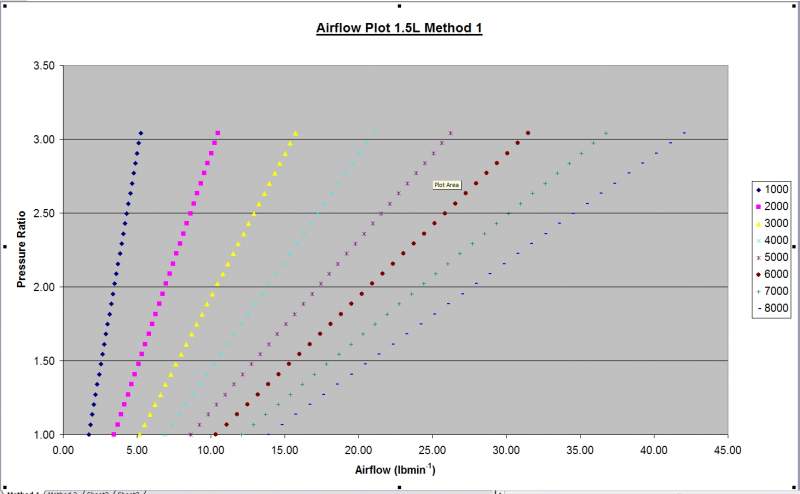
The turbos fitted to rustysills' car made it a pleasure to map (see here for full info: http://www.300zx.co.uk/forums/showthread.php?165792-Re-map&p=1689772&viewfull=1#post1689772). They flowed so much air compared to standard, I had to reduce the RPM limit until larger injectors are fitted, reducing the boost not an option due to boost jets.


my second question is this, if the z32 has been knocking about now for 20 odd years how comes no one else has mainstreamed the idea od running beyond 16psi, whats changed or is new to push things through (im not questioning your results or intellect btw) what are you bringing to the table that's pushing the boat forward.


Good question, but unfortunately it has less to do with what I'm bringing to the table, as to what has been kept away from people's plates in this country...


From what I know, there is Bobgenie & SlickPete (Emerald), Silverline (Link) & MarkDerby (Emerald on new build) that run aftermarket EMS on the VG and myself on NIStune. That is unheard of. Look at the Honda/Evo/Scooby/200sx etc etc tuning scene for example. Decade-old chips & boost jets, sure it works. So do bleed valves and 5th injectors, they're still the tuning equivalent of the stone age. A lot of people won't work with Zeds, it's not financially-viable as they are such a pig to work on, so there's not been any great need to move things on and push forward. It is not clever running stock turbos at 21psi compared to T28s at 15psi, I don't want anyone to think I am flying in the face of turbocharger technology and physics. The ONLY reason I am pushing the stock items is because there is such a leap financially from maximising stock turbo set-up and fitting larger turbos. Running any small-frame OEM journal bearing turbo at 21psi is going to exponentially increase wear rate.


IMO, a decent spec list for maximising the set-up before having to pull the engine for larger turbos:


Dual short-ram intakes*

Grade 8 spark plugs**

Full exhaust system & decats

FMIC

Larger intake piping (2.5")

All the deletes (AIVs, PRVR, PCVs, CC etc. AC optional, not including EGR until engine comes out)

Adjustable FPR set at 3.5 bar (400cc equivalent) or 4 bar (427cc equivalent) (fitting 555s isn't the only way). Although it isn't strictly required, you have to consider reliability. For example: I would rather run injectors at 50% duty than 90%...

Aftermarket EMS, NIStune or custom-mapped ECU (surprise :laugh:)

1.2-1.3 bar.


I don't see any reason why this can't get the average Zed to 450bhp, reliably. It's also quite a lot of modifications for your average Zed onwner I think, a big FMIC is not to everyone's taste.


*Running a single MAF is fine for the power level, but running dual intakes makes a big difference with how the engine breathes. Really is night & day with the short intakes.

**One thing that isn't mentioned much are spark plugs. If you ramp the boost up with stock platinum PFR6B-11s, you will likely melt something due to pre-ignition. See here for a spark plug debate: http://www.300zx.co.uk/forums/showthread.php?165254-Spark-plug-type-and-size-for-a-modified-TT&highlight=bcr8es

As with ALL cars that I run personally, I run BCR8ES plugs in my Zed. £8 a set. They are not the correct physical size for the Zed combustion chamber, and BKR7Es are closer. However, I have run BCR8ES in so many different cars over the last decade with zero issues other than slightly fouling whilst cruising (CA18DET only) that I simply cannot recommend any other plug when modifying. I wouldn't run a platinum plug in a lawnmower. This is my own opinion when it comes to plugs, based on the fact I have never melted anything, even when running 1.9 bar boost. If it's good enough for A. Graham Bell, it's good enough for me :laugh:

Hi there. I'm quite new to this forum (bit of a lurker) and have been reading this thread with much interest. I am curious however as to why you'd suggest FMIC? Good SMICs such as the Ashspec Massives are shown to be the most effect both in terms of pressure drop, charge temp and flow (apart from TDM's FMIC). Furthermore, with SMICs, you won't restrict flow to the radiator. Even with a good high capacity radiator, good flow of fresh clean air would be essential. Just my 2p.


Just for information, here's some comparison work.


http://twinturbo.net/net/viewmsg.aspx?forum=technical&msg_id=1010092

Hi there. I'm quite new to this forum (bit of a lurker) and have been reading this thread with much interest. I am curious however as to why you'd suggest FMIC? Good SMICs such as the Ashspec Massives are shown to be the most effect both in terms of pressure drop, charge temp and flow (apart from TDM's FMIC). Furthermore, with SMICs, you won't restrict flow to the radiator. Even with a good high capacity radiator, good flow of fresh clean air would be essential. Just my 2p.


Just for information, here's some comparison work.


http://twinturbo.net/net/viewmsg.aspx?forum=technical&msg_id=1010092


Short dual intakes placing the filters where SMICs sit is how the Zed is set up at the moment, which is why I didn't include SMICs.


There are so many different ways in which to do things though, I definitely wasn't suggesting FMICs are better than SMICs, and the list wasn't intened to be definitive, just an example. I think that keeping the turbo intake piping as short and as straight as possible really benefits the way the engine responds on the road. Of course, with dual intakes, you've got to consider either twin MAFs & voltage adder/divider (Selin translator) or more involved mapping and idle balance bars etc.


My ultimate spec as far as intercooling goes would be a bespoke charge cooler for each turbo with minimal piping.

Edited by Noz

Thanks for the reply. I do agree with what you're saying, however, I can't imagine there's too much difference as the intake pipework is either side of the engine anyway. Would you have thought it be more detrimental being A: closer to the radiator and slowing airflow, B: becoming a bit of a heatsoak due to its proximity?


I haven't had a 300zx for a number of years, but currently looking at building something rather rapid for track use at some point in the not too distant future and this thread really caught my eye.

Thanks for the reply. I do agree with what you're saying, however, I can't imagine there's too much difference as the intake pipework is either side of the engine anyway. Would you have thought it be more detrimental being A: closer to the radiator and slowing airflow, B: becoming a bit of a heatsoak due to its proximity?


I haven't had a 300zx for a number of years, but currently looking at building something rather rapid for track use at some point in the not too distant future and this thread really caught my eye.

Hi Snozz, I've done a few extensions in Dorchester over the last couple of years. Whereabouts are you? Get yourself in the newbies section and introduce yourself properly bud. Welcome Btw.

ive to always ran short and as straight as possible piping it just less for the air to travel so in term forces more air in as its not taking as long to travel up the long piping,


also alot of people seem to think that 2.5in exhaust is best to run which it isnt your much better of with 3in exhaust straight through and again as straight as possible, people say 2.5 is better as you need the back pressure which simply isnt true, the turbo will create the backpressure you need, and yes ive looked into this so no its true, all the skyline,evo,supras all run 3in exhausts at least aswell as larger diameter intercooler piping,


i think when it comes to intercoolers alot is down to prefferance but again all the biggest powered cars all use front mounts, hks,greddy ect all make fmi for high powered cars

Hi there. I'm quite new to this forum (bit of a lurker) and have been reading this thread with much interest. I am curious however as to why you'd suggest FMIC? Good SMICs such as the Ashspec Massives are shown to be the most effect both in terms of pressure drop, charge temp and flow (apart from TDM's FMIC). Furthermore, with SMICs, you won't restrict flow to the radiator. Even with a good high capacity radiator, good flow of fresh clean air would be essential. Just my 2p.


Just for information, here's some comparison work.


http://twinturbo.net/net/viewmsg.aspx?forum=technical&msg_id=1010092


well stop lurking and get involved theres plenty of us around this area.

Hello. I actually live just outside Dorchester near West Knighton.


I have family round the corner in broadmayne.

ive to always ran short and as straight as possible piping it just less for the air to travel so in term forces more air in as its not taking as long to travel up the long piping,


also alot of people seem to think that 2.5in exhaust is best to run which it isnt your much better of with 3in exhaust straight through and again as straight as possible, people say 2.5 is better as you need the back pressure which simply isnt true, the turbo will create the backpressure you need, and yes ive looked into this so no its true, all the skyline,evo,supras all run 3in exhausts at least aswell as larger diameter intercooler piping,


i think when it comes to intercoolers alot is down to prefferance but again all the biggest powered cars all use front mounts, hks,greddy ect all make fmi for high powered cars


just a thought but most of the skyline, supra all that lot are almost exclusively single exit. so actually in terms of volume and resistance its like them running a 5" system is it not?

well no not really as youve got 2.5 inch down pipe on each turbo so thats still restricting that turbo if you run divorced pipes its exact same as running a single exit on a single turbo as each exhaust is the outlet for that turbo its connected to, if you get what i mean lol

Thanks for the reply. I do agree with what you're saying, however, I can't imagine there's too much difference as the intake pipework is either side of the engine anyway. Would you have thought it be more detrimental being A: closer to the radiator and slowing airflow, B: becoming a bit of a heatsoak due to its proximity?


I haven't had a 300zx for a number of years, but currently looking at building something rather rapid for track use at some point in the not too distant future and this thread really caught my eye.


Heat soak and air restriction is not an issue with FMICs. FMICs will always be a lot cooler than a rad, plus you have the effect of convection between rad & FMIC, so heat soak is relatively impossible. Air flows through the fins at any rate, so restriction not really an issue. The majority of modified turbocharged cars run them, just google images for FMIC and you get everything from Evos to A4s. We do have the option of SMICs, but I personally would rather shorten the intake tract. Reducing the restriction that a turbo has to suck air through is a well-known method of increasing response. The Zed needs all the help it can get given the placement of the turbos. They also come from the factory with an AC rad completely blocking the coolant rad.


There is no difference between fitting an FMIC on a Zed as there is on any other car. With the Zed there is even more space due to the looooong nose.


DSCF5875.jpg


Cosworth RS500:


RS500INTERCOOLERANDRADANDFANS.jpg

well no not really as youve got 2.5 inch down pipe on each turbo so thats still restricting that turbo if you run divorced pipes its exact same as running a single exit on a single turbo as each exhaust is the outlet for that turbo its connected to, if you get what i mean lol


not really no lol :s

because if im not mistaken an rb for example is still twin turbos and those two down pipes branch into a single 3" exhaust.

where as a vg that down pipe pops into a 2.5" exhaust, on either side.

so each turbo has its own 2.5" exhaust section rather than 2 turbos being forced down one 3" section. maybe im confused. unless you've got fat tubs I wouldn't think youd need 3" either side to efficiently remove the output, and I cant see why in terms of output a single 3" would be better than a pair of 2.5"ones.

no sorry must of writen it wrong what you would be best with is two 3in divorced system, i was just saying supras ect run a 3in system.


youd be best with 3in down pipes and 3inch divorced system (one each side),


things like an extra 0.5inch in intercooler piping and exhaust size does make alot of differance specially to throttle responce and also aids spool up especially on bigger turbos

Heat soak and air restriction is not an issue with FMICs. FMICs will always be a lot cooler than a rad, plus you have the effect of convection between rad & FMIC, so heat soak is relatively impossible. Air flows through the fins at any rate, so restriction not really an issue. The majority of modified turbocharged cars run them, just google images for FMIC and you get everything from Evos to A4s. We do have the option of SMICs, but I personally would rather shorten the intake tract. Reducing the restriction that a turbo has to suck air through is a well-known method of increasing response. The Zed needs all the help it can get given the placement of the turbos. They also come from the factory with an AC rad completely blocking the coolant rad.


There is no difference between fitting an FMIC on a Zed as there is on any other car. With the Zed there is even more space due to the looooong nose.


[ATTACH=CONFIG]68180[/ATTACH]


Cosworth RS500:


[ATTACH=CONFIG]68181[/ATTACH]


Some front mounters cross over the charge flow tho, obviously as ya know the left turbo supplies the right bank and vice versa tho the design of some fmic's crosses it over, apparently not a great thing tho I've personally never seen anything to back that up, some other fmic designs are just more or less 2 SMIC's stuck together so keep the low as Nissan intended, any ideas why changing that might cause any problems??

Just found this aparantly reason for not fitting fmic ?? Quite interested as i was toying with the idea of getting one lol


4) With the Apollo or Greddy, there are inherent problems with the "crossflowing" design of those intercoolers. They cross-over the airflow so that it eliminates the balance that Nissan developed into the powerplant. i.e. the driver's turbo is powered by the driver's cylinder banks, however, the driver's turbo feeds air into the passenger cylinder banks (note the design of the upper plenum). This creates a great deal of airflow balance between the two banks of cylinders. By crossing-over the intake tracts, the chance of running one side of the engine dangerously leaner than the other is very high.

Very interesting this. I will be changing my turbos in the next few months.


No idea what to go for yet but reading this is giving me food for thought.

not really no lol :s

because if im not mistaken an rb for example is still twin turbos and those two down pipes branch into a single 3" exhaust.

where as a vg that down pipe pops into a 2.5" exhaust, on either side.

so each turbo has its own 2.5" exhaust section rather than 2 turbos being forced down one 3" section. maybe im confused. unless you've got fat tubs I wouldn't think youd need 3" either side to efficiently remove the output, and I cant see why in terms of output a single 3" would be better than a pair of 2.5"ones.

im on my phone today but will explain everything about exhausts flow and sizes to power ratios when i get in the workshop in the morning and have a keyboard to use instead of a galaxy lol

for the record i run a twin 3" system but more on that tomorrow

if any one has any technical questions on exhaust or engine design and setup etc please feel free to ask me on this thread

Join the conversation

You can post now and register later. If you have an account, sign in now to post with your account.

Guest
Unfortunately, your content contains terms that we do not allow. Please edit your content to remove the highlighted words below.
Reply to this topic...

Recently Browsing 0

  • No registered users viewing this page.

Important Information

Terms of Use

Configure browser push notifications

Chrome (Android)
  1. Tap the lock icon next to the address bar.
  2. Tap Permissions → Notifications.
  3. Adjust your preference.
Chrome (Desktop)
  1. Click the padlock icon in the address bar.
  2. Select Site settings.
  3. Find Notifications and adjust your preference.